
Custom Prototype Development Insights: Design and Develop Custom 3D Prototypes
- Joe Stone
- Jun 2
- 4 min read

In today’s fast-paced manufacturing environment, the ability to quickly transform ideas into physical models is a game-changer. Custom 3D prototypes allow businesses to test, refine, and perfect their designs before committing to full-scale production. This process not only saves time and money but also enhances product quality and innovation. I want to share insights on how to design and develop custom 3D prototypes that can elevate your manufacturing projects to the next level.
Unlocking Custom Prototype Development Insights
Understanding the value of custom prototype development is essential for any manufacturing company aiming to stay competitive. Prototyping bridges the gap between concept and reality, providing a tangible representation of your design. This step is crucial for identifying potential flaws, improving functionality, and ensuring the final product meets all specifications.
Some key benefits of custom 3D prototypes include:
Rapid iteration: Quickly test multiple design variations without the high costs of traditional tooling.
Enhanced communication: Physical models help teams and clients visualize the product better than 2D drawings.
Risk reduction: Early detection of design flaws reduces costly errors during production.
Market validation: Prototypes can be used for user testing and feedback before launch.
By leveraging advanced 3D printing technologies, manufacturers can create prototypes with complex geometries and precise details that were once impossible or too expensive to produce.

How to Create a 3D Prototype?
Creating a 3D prototype involves several critical steps that ensure the final model accurately represents your design intent. Here’s a practical guide to help you through the process:
Conceptualization and Design
Start with a clear idea or sketch of your product. Use CAD (Computer-Aided Design) software to create a detailed 3D model. Popular tools include SolidWorks, AutoCAD, and Fusion 360. Ensure your design includes all necessary dimensions and functional features.
Material Selection
Choose the right material based on the prototype’s purpose. For functional testing, engineered plastics like ABS or nylon are ideal. For visual models, resin or PLA might suffice. Material choice affects durability, flexibility, and finish quality.
3D Printing Technology
Select the appropriate 3D printing method:
Fused Deposition Modeling (FDM): Cost-effective for basic prototypes.
Stereolithography (SLA): High precision and smooth surface finish.
Selective Laser Sintering (SLS): Suitable for durable, functional parts.
Printing and Post-Processing
Once printed, prototypes often require cleaning, sanding, or painting to achieve the desired look and feel. Post-processing can also include assembly if the prototype consists of multiple parts.
Testing and Feedback
Use the prototype to conduct functional tests or gather user feedback. Document any issues or improvements needed and iterate the design accordingly.
Following these steps ensures your prototype is not only visually accurate but also functional and ready for real-world application.
The Role of Technology in Custom 3D Prototype Development
Technology is at the heart of modern prototyping. The integration of CAD software with advanced 3D printing machines has revolutionized how prototypes are developed. Today, you can achieve:
High precision and repeatability: Machines can produce parts with tolerances as tight as a few microns.
Complex geometries: Designs with internal channels, lattice structures, or intricate details are now feasible.
Faster turnaround times: Prototypes that once took weeks can now be produced in days or even hours.
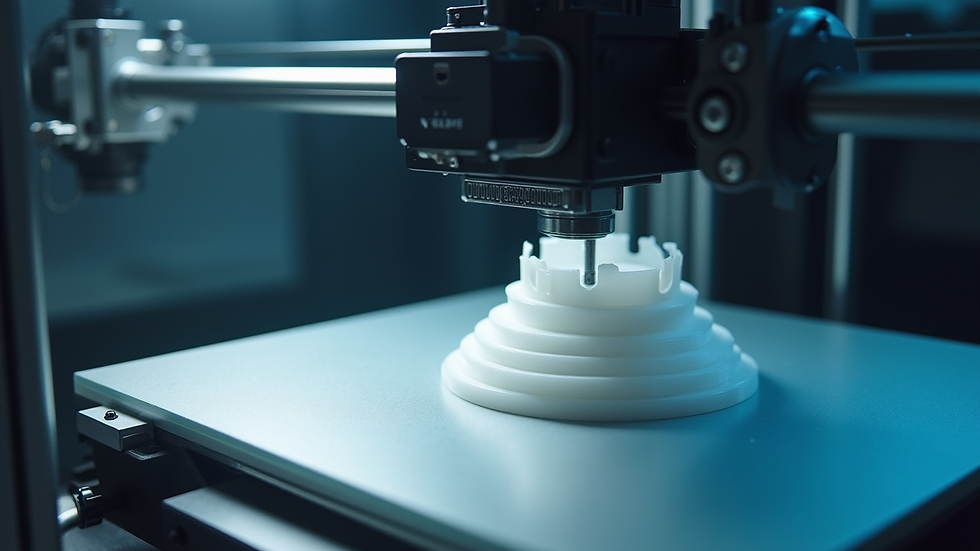
Moreover, the rise of cloud-based design platforms allows teams to collaborate remotely, speeding up the design approval process. This synergy between software and hardware is what makes custom 3d prototype development a powerful tool for manufacturers.
Practical Tips for Maximizing Prototype Effectiveness
To get the most out of your custom 3D prototypes, consider these actionable recommendations:
Define clear objectives: Know what you want to test or demonstrate with your prototype.
Keep designs simple initially: Start with basic models to validate core concepts before adding complexity.
Use modular designs: Break down prototypes into parts that can be easily modified or replaced.
Document every iteration: Keep detailed records of changes and test results to track progress.
Collaborate closely with your prototyping partner: Share feedback and insights to refine the process.
By following these tips, you can reduce development cycles and improve product quality, ultimately accelerating your time to market.
Future Trends in 3D Prototyping for Manufacturing
The future of custom 3D prototype development looks promising with emerging technologies shaping the landscape:
Multi-material printing: Combining different materials in one print to simulate real product properties.
AI-driven design optimization: Using artificial intelligence to create more efficient and innovative designs.
Sustainable materials: Increasing use of biodegradable and recyclable materials for eco-friendly prototyping.
Integration with IoT: Embedding sensors and electronics directly into prototypes for smart product testing.
Staying ahead of these trends will help manufacturers maintain a competitive edge and deliver superior products.
Elevate Your Product Development with Custom 3D Prototypes
Investing in custom 3D prototypes is no longer a luxury but a necessity for efficient product development. It empowers you to innovate faster, reduce risks, and communicate ideas more effectively. Whether you are refining a complex engineered plastic part or testing a new industrial solution, the right prototype can make all the difference.
By embracing the latest technologies and best practices in custom 3d prototype development, you can transform your creative ideas into tangible, high-quality products that inspire confidence and satisfaction.
Start your journey today and experience the benefits of precision, speed, and innovation in prototyping.
Ready to bring your ideas to life? Explore how custom 3d prototype development can transform your manufacturing process.


Comments